Choosing the right pet sitting software can make a huge difference to the success of your business. Whether you're a solo pet sitter, professional dog walker or managing a team of staff, the right software can save hours of administration, improve customer service and help your business grow.
In this guide, we'll compare the leading pet sitting software available in the UK, explain the features you should look for, and help you decide which solution is best suited to your business. We'll also look at the other essential tools that successful pet care professionals use every day.
With over 20 years of experience supporting pet sitting and dog walking businesses across the UK, NarpsUK has helped thousands of professionals build successful businesses. This guide compares the key features to look for in pet sitting software and highlights the essential tools that can help you run your business more efficiently.
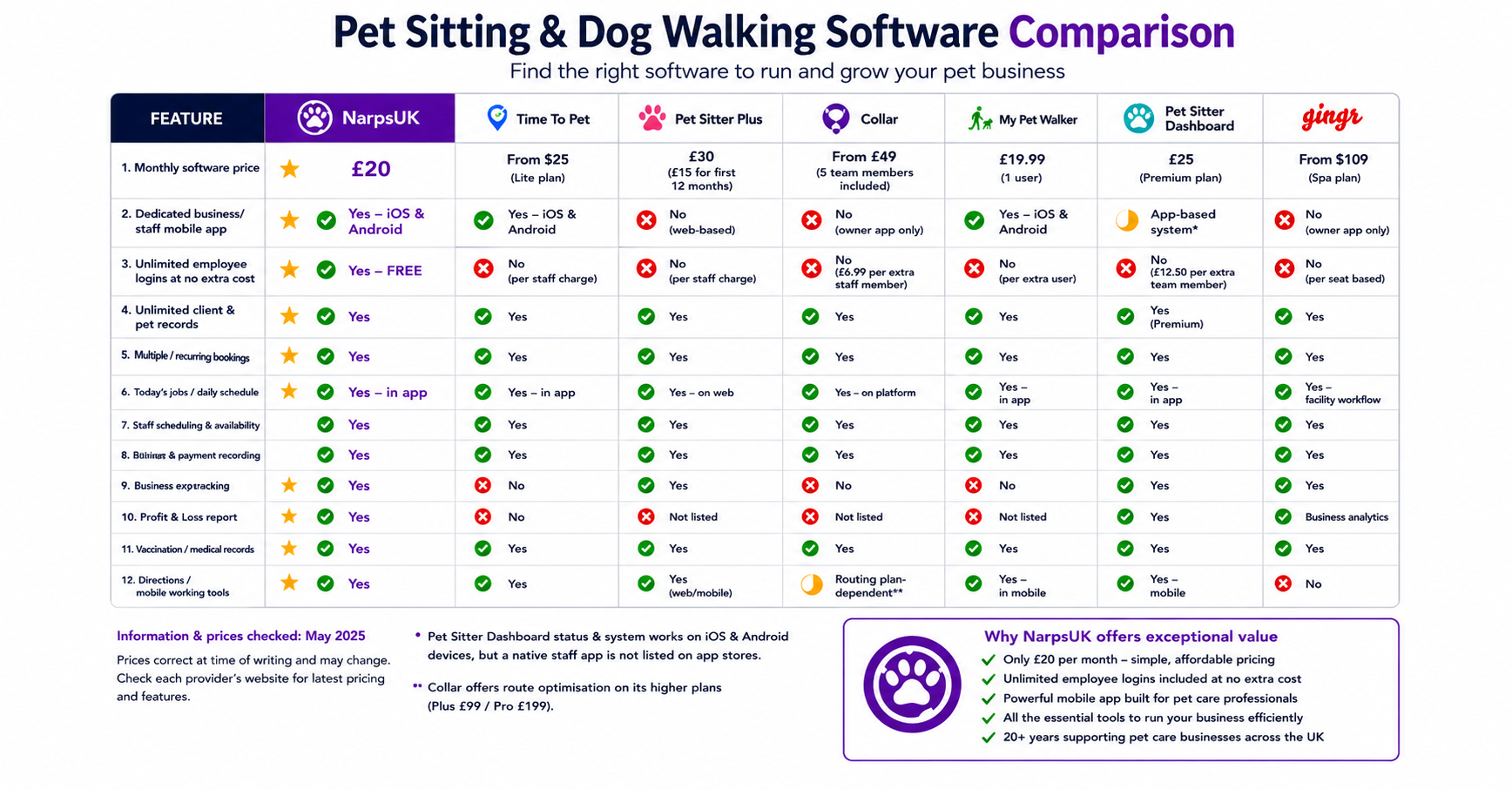
The comparison above shows that pet sitting software varies considerably in both price and functionality. While some platforms offer advanced features at a higher monthly cost, NarpsUK has been designed to provide the core tools pet sitters, dog walkers and growing pet businesses need at an affordable £20 per month, including a dedicated mobile app and unlimited employee logins at no additional cost.
Why Choosing the Right Pet Sitting Software Matters
A pet sitting business involves much more than caring for animals. Daily responsibilities often include:
- Managing bookings and schedules
- Communicating with clients
- Tracking payments and invoices
- Maintaining records and contracts
- Ensuring compliance with legal requirements
Without the right systems, these tasks can quickly become overwhelming.
Using the right tools allows you to:
- Save time and reduce admin work
- Deliver a more professional service
- Improve client experience
- Scale your business efficiently
For many professionals, combining tools with guidance from organisations like NarpsUK (National Association of Pet Sitters & Dog Walkers) provides both practical support and industry credibility.
1. Compare Pet Sitting Software
When comparing pet sitting and dog walking software, price is only part of the picture. Consider how you will use the software every day — from managing bookings and client records to invoicing, organising staff and accessing jobs while you're out working.
For businesses with employees, it is also important to check whether additional staff accounts increase the monthly subscription cost. NarpsUK includes unlimited employee logins at no additional charge, which can make a significant difference as your business grows.
The Backbone of Your Business
One of the most important tools for any pet sitter is reliable scheduling software. As your client list grows, manually managing bookings becomes inefficient and increases the risk of errors.
Modern pet sitting and dog walking software can bring many of the everyday tasks involved in running a pet business together in one place. Depending on the software you choose, features may include:
• Managing bookings and recurring services
• Organising daily visits and appointments
• Storing client and pet information and care notes
• Creating and sending invoices
• Recording payments and outstanding balances
• Managing staff schedules and availability
• Accessing daily jobs while out and about via a mobile app
For a busy pet sitter or dog walker, having bookings, client and pet records, invoices and daily schedules together in one system can save considerable administration time. For larger businesses, the ability to allocate jobs to different staff members and manage their availability becomes increasingly important as the business grows.
Why It’s Essential in 2026
Clients increasingly expect a professional and reliable service. Using dedicated pet sitting and dog walking software can help you stay organised, keep accurate client and pet records, manage bookings efficiently and provide clear communication — all of which can help build trust and create a more professional experience for your customers.
2. Client Management (CRM) Tools
Good pet sitting software should keep important client and pet information together and make it easy to access whenever it is needed. This can include:
• Client contact and address details
• Individual pet profiles and care instructions
• Medical information, vaccinations and expiry dates
• Behavioural notes and special requirements
• Emergency and veterinary contact details
• Booking and service history
• Key information and access instructions
• Contracts, forms and other client documents
Keeping this information together is particularly useful when several employees care for the same pets, helping ensure that everyone has access to the information they need to provide a consistent service.
3. Accounting and Invoicing Tools
Managing Your Finances with Ease
Managing invoices, payments and business finances can become increasingly time-consuming as a pet business grows. Choosing software with built-in financial tools can reduce administration and give you a clearer picture of how your business is performing.
Useful features to look for include:
• Creating and sending professional invoices
• Sending multiple invoices at the same time
• Recording payments and outstanding balances
• Sending reminders for unpaid invoices
• Adding deposits and discounts
• Recording business expenses
• Recording staff wages as business expenses
• Income and financial reports
• Profit and Loss reporting
NarpsUK includes invoicing, payment recording, business expenses and Profit & Loss reporting within the £20 monthly software subscription, helping pet businesses manage both their everyday bookings and their finances from one system.
What Pet Business Owners Say About NarpsUK Software
Don't just take our word for it. NarpsUK has been helping professional pet sitters and dog walkers run their businesses for many years. Here are some comments from genuine NarpsUK members on Trustpilot.
★★★★★
I use the Narps software. It has made my life a million times easier and saved me so much time.
— Kerry Skene, Trustpilot review
★★★★★
The software is so easy to use and very professional. The app is absolutely brilliant and runs my business for me.
— Mrs Maria Rodgers, Trustpilot review
★★★★★
The mobile app is great when you are working as you can see your schedule without carrying around a paper diary.
— Animalcrackers NorthEast, Trustpilot review
★★★★★
The booking database and invoice system is very reliable and is a valuable asset in running my business.
— Adrian, Trustpilot review
Read more genuine NarpsUK member reviews on Trustpilot
4. Marketing and Social Media Tools
Even with great software and excellent service, a pet business still needs a steady flow of new customers. Having a strong online presence helps local pet owners discover your business and gives them confidence in the services you provide.
Useful marketing tools and channels include:
• Facebook and Instagram
• Google Business Profile
• Social media scheduling tools
• A professional website
• Online business and pet-sitter directories
• Customer reviews and testimonials
For pet sitters and dog walkers in particular, local visibility is extremely important. Keeping your business information consistent across your website, social media profiles and directory listings can make it easier for potential customers to find and contact you.
Pro Tip: Regularly sharing genuine pet photos, customer testimonials and updates about your services can help build familiarity and trust with local pet owners.
5. Website and Online Presence Tools
Your Digital Shopfront
Your website is often one of the first places a potential customer will go when deciding whether to trust you with their pets and access to their home. It should make it easy for visitors to understand who you are, what services you provide and how to contact you.
A professional pet sitting or dog walking website should ideally include:
• Clear descriptions of your services
• The areas or postcodes you cover
• Pricing or guidance on your charges
• Contact information
• Customer reviews and testimonials
• Information about insurance, training and professional credentials
• Links to your social media pages
A profile on a recognised pet-sitter directory can provide another valuable online presence, particularly for smaller businesses that do not yet have their own website. It can also give potential customers another way to discover your services when searching locally.
6. Insurance and Risk Management Tools
Protecting Your Business
Working with other people's pets and having access to clients' homes carries risks, even for experienced professionals. Appropriate specialist pet business insurance is therefore an important part of running a professional pet sitting or dog walking business.
Depending on the services you provide, cover to consider may include:
• Public liability
• Care, custody and control of animals
• Loss of keys
• Veterinary fees for animals in your care
• Employers' liability if you employ staff
• Cover for transporting animals where applicable
Always check that the policy you choose covers the specific services your business provides, such as pet sitting, dog walking, home boarding or doggie daycare. Having appropriate insurance also helps demonstrate to potential clients that you take your professional responsibilities seriously.
7. Communication Tools
Building Strong Client Relationships
Clear and consistent communication is key to client satisfaction.
Useful tools include:
- Messaging apps
- Email platforms
- Automated updates
- Photo sharing tools
Many pet sitters send updates during visits, including photos and notes. This reassures clients and enhances the overall service experience.
8. Training and Professional Development
Staying Ahead in the Industry
The pet care industry continues to evolve, with rising client expectations.
Investing in training helps you:
- Improve your skills
- Stay updated with industry standards
- Build credibility and trust
Many professionals choose structured programmes and ongoing learning opportunities through organisations offering NarpsUK Membership, which provides access to resources, training and business support.
9. Contracts and Documentation Tools
Ensuring Professional Standards
Having clear contracts and documentation is essential for protecting both you and your clients.
Important documents include:
- Service agreements
- Emergency contact forms
- Veterinary release forms
- Terms and conditions
Using templates or digital tools ensures consistency and saves time.
10. Time Management and Productivity Tools
Working Smarter, Not Harder
As your business grows, managing your time effectively becomes increasingly important.
Productivity tools can help you:
- Plan your day efficiently
- Set reminders and deadlines
- Track tasks and priorities
This allows you to maximise your working hours while maintaining a high level of service.
Building a Complete Tool Stack
The most successful pet sitters don’t rely on just one tool. Instead, they build a complete system that covers every aspect of their business.
A typical tool stack might include:
- Scheduling software
- CRM system
- Accounting platform
- Marketing tools
- Communication apps
- Insurance cover
By integrating these tools, you create a streamlined workflow that supports both efficiency and growth.
Expert Insight: What Sets Successful Pet Sitters Apart
Experienced professionals understand that tools alone are not enough. Success comes from combining:
- Practical experience
- Professional training
- Reliable systems
- Strong client relationships
Being part of a recognised organisation like NarpsUK also helps establish trust and credibility, which can make a significant difference when attracting new clients.
Conclusion
Choosing the best pet sitting or dog walking software for your business depends on the features you actually need, the size of your team and the amount you want to spend each month. More expensive software may offer additional automation and specialist features, but these are not necessarily required by every pet care business.
NarpsUK Pet Sitting & Dog Walking Software has been developed specifically for the pet care industry, combining client and pet records, flexible recurring bookings, staff management, invoicing, financial tools and a dedicated mobile app for £20 per month. Unlimited employee logins are included at no additional cost, making it suitable for solo professionals as well as growing pet sitting, dog walking and doggie daycare businesses.
With more than 20 years' experience supporting professional pet sitters and dog walkers, NarpsUK understands the practical needs of running a pet business. The aim is simple: to provide the everyday tools pet professionals need without making software unnecessarily complicated or expensive.
Frequently Asked Questions
What is the most important tool for a pet sitting business?
Scheduling software is often considered the most important tool, as it helps manage bookings, appointments and client information efficiently.
Do I need software to run a pet-sitting business?
While it is possible to start without software, using dedicated tools makes it much easier to manage clients, bookings and communication as your business grows.
How can I attract more clients as a pet sitter?
Building an online presence, collecting reviews and using social media consistently are effective ways to attract new clients.
Is insurance necessary for pet sitters in the UK?
Yes, insurance is essential to protect against accidents, injuries and other risks associated with caring for pets.