How to Become a Dog Walker in the UK
If you love dogs and would like to turn that passion into a business, becoming a professional dog walker can be a rewarding career.
But how do you become a dog walker in the UK, and what do you actually need to get started?
Although you do not generally need a specific formal qualification simply to offer dog walking services, running a professional dog walking business involves much more than taking dogs for a walk. You are being trusted with someone's much-loved pet, often along with access to their home and keys.
You therefore need to think about training, insurance, contracts, animal welfare, business organisation and, importantly, how you will attract customers.
NarpsUK has supported professional pet sitters and dog walkers for more than 20 years. This guide explains the key steps involved in becoming a dog walker and starting your own dog walking business in the UK.
Explore NarpsUK's guide to starting a dog walking business →
1. Do You Need Qualifications to Become a Dog Walker?
There is no single mandatory qualification required simply to call yourself a dog walker in the UK.
However, professional training can give you valuable knowledge and help reassure prospective customers that you take the responsibility of caring for their pets seriously.
Useful areas of knowledge include:
- Dog behaviour and body language
- Safe dog handling
- Animal welfare
- Canine first aid
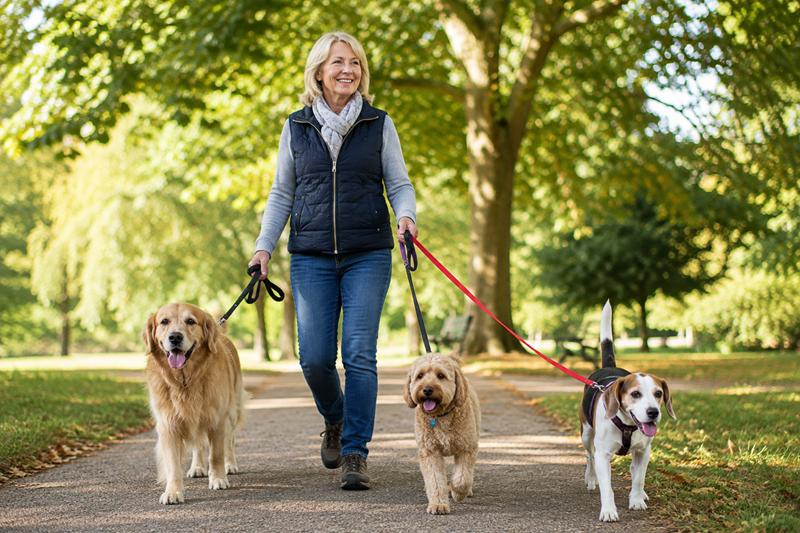
- Managing dogs in groups
- Dealing with emergencies
- Customer care
- Running and marketing a pet care business
NarpsUK offers a Pet Sitting & Dog Walking Business Course, designed specifically for people who want to establish and run a professional pet care business.
Find out about Pet Sitting & Dog Walking training →
2. Gain Experience With Different Dogs
Loving dogs is an excellent starting point, but professional dog walking requires confidence with dogs of different breeds, sizes, ages and temperaments.
You may encounter:
- Large or powerful dogs
- Nervous dogs
- Rescue dogs
- Puppies
- Older dogs
- Dogs with medical requirements
- Dogs that react differently around other animals
Before accepting a new dog, talk to the owner about its behaviour, routine, recall, health and any known problems.
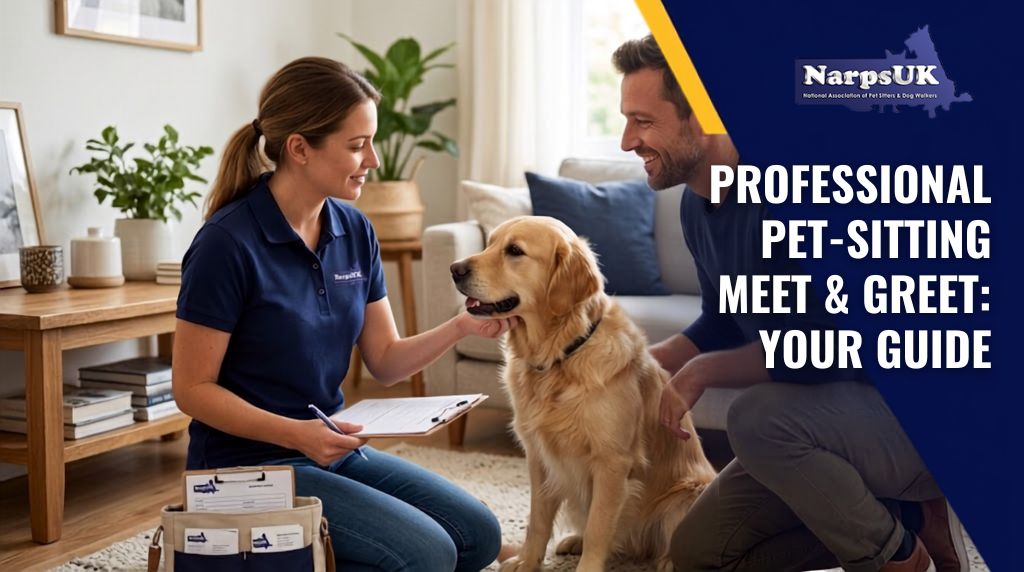
A meet-and-greet before commencing regular walks can also help you determine whether you and the dog are a suitable match.
3. Understand Your Animal Welfare Responsibilities
Anyone caring for animals has important welfare responsibilities.
In England and Wales, the Animal Welfare Act 2006 sets out welfare requirements for animals. Scotland and Northern Ireland have their own animal welfare legislation.
The five welfare needs commonly considered are:
- A suitable environment
- A suitable diet
- The ability to exhibit normal behaviour
- Appropriate companionship
- Protection from pain, suffering, injury and disease
As a professional dog walker, the welfare and safety of the dogs in your care should always come first.
4. Get Appropriate Dog Walking Insurance
Professional dog walkers should have suitable business insurance.
This can provide important protection should something unexpected happen while a dog is in your care.
Depending upon the policy, specialist pet business insurance can include areas such as public liability and care, custody and control of animals.
NarpsUK works with a specialist pet business insurance provider, and eligible NarpsUK members can access an insurance discount.
Find out more about pet sitter and dog walker insurance →
Always check the individual insurer's current terms, conditions and level of cover before purchasing a policy.
5. Consider a Criminal Record Check
Dog walkers are frequently entrusted with customers' house keys and may enter properties while owners are away.
A criminal record check can therefore provide additional reassurance to prospective customers.
NarpsUK provides information for members about obtaining the appropriate Basic Disclosure/Criminal Record Check.
Find out more about criminal record checks for pet sitters and dog walkers →
6. Check Local Council Rules
Rules affecting professional dog walkers can vary between areas.
Some councils have restrictions concerning professional dog walking, particular parks or open spaces, the number of dogs that can be walked together, or areas where dogs must remain on leads.
You should therefore check the requirements of your own local authority before starting your business.
NarpsUK's professional standards also require members to follow responsible dog-walking practices.
7. Decide What Dog Walking Services You Will Offer
Before launching your business, decide exactly which services you want to provide.
These could include:
- Individual dog walks
- Group dog walks
- Puppy visits
- Pet sitting visits
- Feeding visits
- Holiday pet care
- House sitting
- Pet taxi services
- Home boarding, where appropriately licensed
Offering complementary services can help increase your income and provide customers with one trusted person for several pet care requirements.
If you offer services such as home boarding or dog day care, additional local-authority licensing requirements can apply, so always check the rules relevant to the services you intend to provide.
8. Decide How Much to Charge for Dog Walking
One of the first questions new dog walkers ask is:
How much should I charge for dog walking?
There isn't one correct UK price.
Your rates will depend upon factors including:
- Your location
- Length of the walk
- Individual or group walking
- Travel time
- Number of dogs from the same household
- Your experience
- Local competition
- Your business expenses
Research other professional dog walkers in your area, but don't automatically try to become the cheapest.
Customers are trusting you with their pets and often their homes. Professionalism, reliability, insurance, training and trust can be far more important than simply offering the lowest price.
9. Put Professional Forms and Contracts in Place
Clear written agreements protect both you and your customers.
Depending upon the services you offer, you may need documentation covering areas such as:
- Customer and pet information
- Veterinary details
- Emergency contacts
- Key handling
- Dog walking authorisation
- Off-lead permission
- Medication
- Cancellation terms
- Payment terms
- Data protection
- Service agreements
NarpsUK provides professionally prepared pet sitting and dog walking forms and contracts with selected membership packages.
Learn more about NarpsUK pet sitting and dog walking forms & contracts →
10. Set Up Your Dog Walking Business Properly
Once you begin charging customers, you are running a business.
You'll need to consider areas such as:
- Your business name
- Self-employment and HMRC requirements
- Record keeping
- Income and expenses
- Pricing
- Customer records
- Scheduling
- Invoicing
- Marketing
Being organised from the beginning can save considerable time as your customer base grows.
11. Use Software to Manage Your Dog Walking Business
You may be able to manage your first few customers using a diary or spreadsheet, but this becomes increasingly difficult as your business grows.
Pet business software can help you manage:
- Customers
- Pets
- Bookings
- Schedules
- Invoices
- Payments
- Staff
- Business finances
NarpsUK provides pet sitting and dog walking business software and an app, included with selected NarpsUK memberships and also available separately.
Explore NarpsUK Pet Sitting & Dog Walking Software →
12. How Do You Find Your First Dog Walking Clients?
For many new dog walkers, this is the biggest challenge.
Start by creating a professional presence in your local area.
Useful ways of attracting customers include:
- Creating a Google Business Profile
- Setting up business social media accounts
- Asking satisfied customers for reviews
- Networking with vets, groomers and pet businesses
- Distributing professional flyers
- Encouraging customer referrals
- Joining a recognised professional organisation
- Appearing in online pet sitter and dog walker directories
NarpsUK members can create a professional business profile and eligible members can appear in NarpsUK's pet sitter and dog walker search facilities, helping pet owners discover local professionals.
Learn how to get more pet sitting and dog walking customers →
13. Build Trust and Look Professional
The pet care market can be competitive.
Being good with dogs is essential, but potential customers don't necessarily know that when they first discover your business.
Give them reasons to trust you.
Professional credentials can include:
- Appropriate insurance
- Training
- Criminal record checks
- Professional forms and contracts
- Customer reviews
- Professional membership
- A clear business profile
- Recognised logos and credentials
These can help distinguish a professional business from someone casually offering dog walking services.
What Skills Does a Good Dog Walker Need?
Successful professional dog walkers generally need more than a love of animals.
Important qualities include:
- Reliability
- Patience
- Confidence
- Good communication
- Organisation
- Flexibility
- Good judgement
- Physical fitness
- Business skills
- Self-discipline
- Genuine concern for animal welfare
- The ability to remain calm in unexpected situations
You are responsible not only for the dogs in your care but also for communicating professionally with their owners.
Can You Make a Living as a Dog Walker?
Yes, dog walking can develop into a full-time business, but income varies considerably.
Your earnings will depend upon your prices, number of customers, location, working hours, business costs and the range of services you provide.
Someone offering dog walking alongside pet sitting, puppy visits and other pet care services may have more opportunities to generate income throughout the day.
The aim should be to build a reliable base of repeat customers rather than focusing solely on filling occasional individual walks.
Is There Demand for Dog Walkers in the UK?
Demand varies considerably by area, but many pet owners require help because of work commitments, holidays, health issues or other responsibilities.
Before starting, research your own area.
Search for existing dog walking businesses, compare their services and prices, and consider how you could differentiate your business.
Competition isn't necessarily a reason not to start. It can also demonstrate that people locally are already paying for professional dog walking services.
Can I Just Set Up a Dog Walking Business?
You can start a dog walking business without having to buy a franchise or become an employee of another company.
However, being self-employed means you are responsible for running the business properly.
Before taking your first paying customer, make sure you have researched:
- Insurance
- Local regulations
- Animal welfare
- Business registration/tax requirements
- Contracts
- Pricing
- Customer records
- Emergency procedures
Starting professionally can make it much easier to build customer trust from the beginning.
How NarpsUK Can Help You Become a Professional Dog Walker
NarpsUK — the National Association of Pet Sitters & Dog Walkers — has supported people starting and growing pet care businesses for more than 20 years.
Depending upon the membership selected, benefits can include:
- Professional NarpsUK membership
- Membership certificate
- NarpsUK logos and professional emblems
- Business profile
- Pet sitter and dog walker directory visibility
- Professional forms and contracts
- Training and business resources
- Insurance discounts
- Business support
- Pet sitting and dog walking software and app
If you're serious about becoming a professional dog walker, you don't have to work everything out alone.
Compare NarpsUK Membership Options →