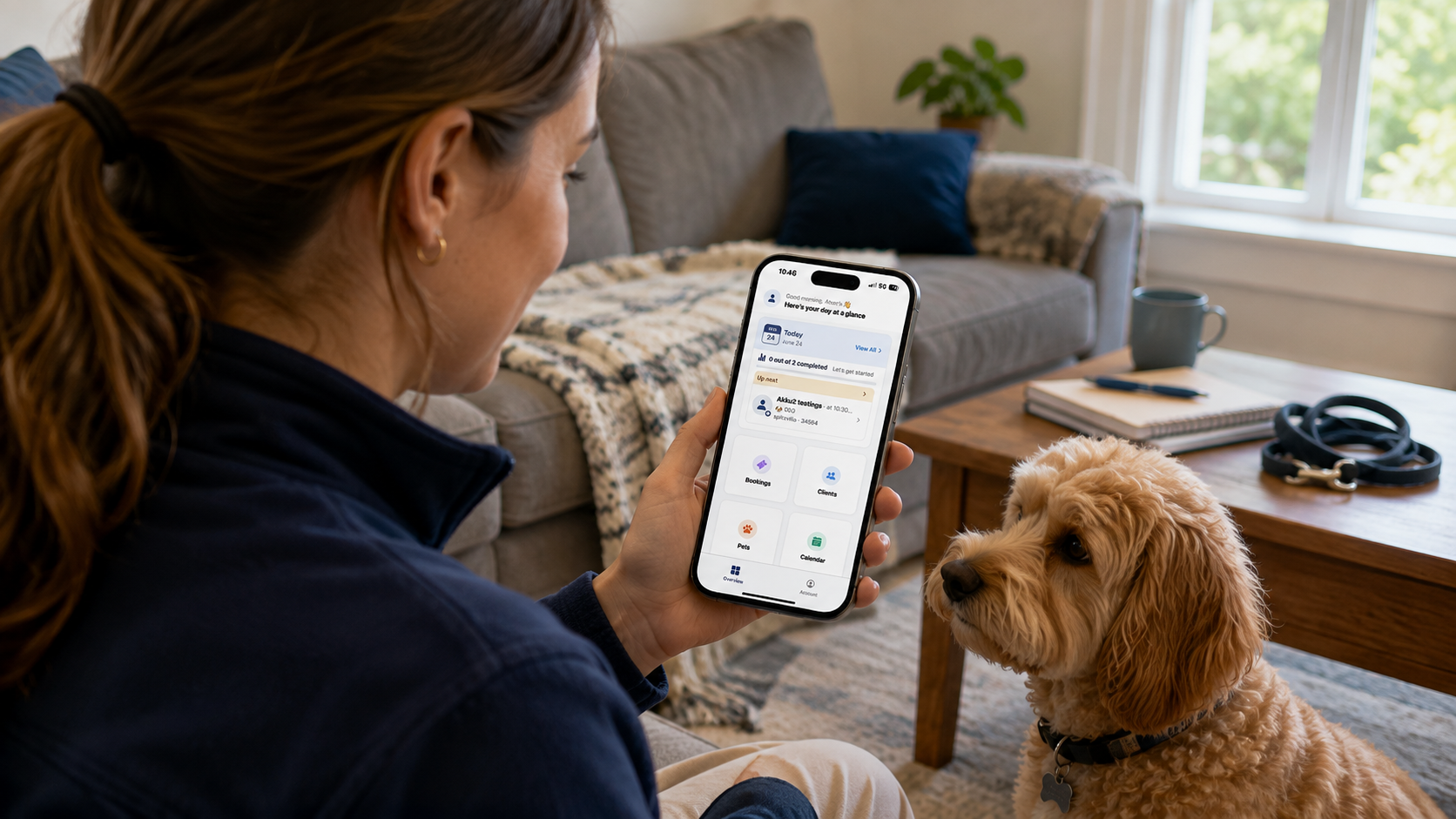
When you care for someone else's pet, having the right information available can make a difficult situation easier to manage. A pet may become unwell, get injured, or need urgent veterinary attention while their owner is unavailable. In these situations, knowing where to find important details such as emergency contacts, veterinary information, medication records and care instructions matters.
For professional pet sitters and dog walkers, keeping this information organised becomes increasingly important as the number of clients and pets they manage grows. Relying on paper notes, text messages or scattered files can make important details harder to find when they a.re needed.
Pet sitting software can provide a more organised way to manage client and pet records, helping sitters keep essential information together and accessible while working.
What is Pet Emergency Information?
Pet emergency information is the important information a pet sitter may need if something unexpected happens while a pet is in their care.
The exact information will vary between pets, but a professional pet sitter may need access to:
- The owner's contact details
- An alternative emergency contact
- The pet's veterinary details
- Relevant medical or health information provided by the owner
- Current medication information
- Feeding or care instructions
- Important behavioural or special-care notes
- Details about allergies or known sensitivities
- Other instructions the owner has provided for the pet's care
Having these details recorded before a booking starts means the sitter does not have to rely on memory or search through old conversations to find them.
Why is It Important to Keep Emergency Pet Information Organised?
Pet sitters often manage several clients at the same time. Each pet can have different routines, requirements and important information.
One dog might need medication at a particular time, while another may have specific dietary requirements. A cat may have a veterinary practice that the owner wants the sitter to contact if necessary.
When information is organised clearly, it is easier to identify the right details for the right pet.
This can be particularly useful when a sitter is working away from home. If information is only stored in a notebook or on a computer, accessing it while out on a visit can be inconvenient.
Keeping accurate records also supports a more professional approach to pet care. Clients want confidence that their instructions and their pet's important details have been recorded properly.
The Problem With Scattered Pet Care Records
Many small pet sitting businesses start with simple systems. A new client might provide their contact details by email, send feeding instructions through WhatsApp and leave veterinary information on a paper form.
That approach may seem manageable when there are only a few clients. However, finding a specific piece of information becomes more difficult as the business grows.
Important details can end up spread across:
- Emails
- Messaging apps
- Paper forms
- Spreadsheets
- Phone contacts
- Notebooks
- Individual documents
The problem is not necessarily that the information has been recorded. It is that the sitter may have to search several places to find it.
For a busy pet sitter, that creates unnecessary administration and increases the chance of overlooking an important instruction.
What Information Should Pet Sitters Keep for Each Pet?
A good client record should contain the information needed to provide the agreed service safely and consistently.
Owner and emergency contact details
Keep the owner's preferred contact details together with any alternative emergency contact information they have provided.
This avoids having to search through previous messages to find the right number.
Veterinary details
Record the veterinary practice and relevant contact information supplied by the owner. If the owner has provided additional instructions about veterinary care, these should also be recorded appropriately.
Medication information
If a pet requires medication as part of its normal care, the sitter should have clear information from the owner about what has been agreed, including relevant instructions.
The purpose of keeping this information digitally is not to replace professional veterinary advice. It is to ensure the sitter can refer back to the owner's instructions when managing the pet's routine care.
Medical and care notes
Important information about a pet's health, behaviour, diet or individual requirements can help a sitter understand what is normal for that particular animal.
These notes can also help distinguish one pet's requirements from another's when managing multiple bookings.
Special instructions
Owners may provide additional instructions about feeding, exercise, access to the property or the pet's usual routine.
Keeping these details with the relevant pet record can make them easier to refer to during a booking.
How Can Pet Sitting Software Help?
Pet sitting software can bring client and pet information together in one central system instead of requiring sitters to maintain several separate records.
For example, rather than keeping veterinary details in one document and emergency contact information in a phone note, a sitter can maintain a dedicated record for the relevant client and pet.
This can make everyday administration easier and provide a clearer reference point when information is needed.
1. Keep client and pet records together
A centralised system allows important information to be associated with the correct client and pet.
This is particularly useful for businesses looking after multiple animals, where manually searching through separate files can become time-consuming.
2. Store emergency contacts
Emergency contact details can be recorded alongside the relevant client and pet information.
Instead of searching through old conversations, the sitter has a dedicated place to check the information provided by the client.
3. Record veterinary details
Veterinary information can be kept as part of the pet's record, making it easier to refer back to when required.
This is especially useful when a sitter works with several clients who use different veterinary practices.
4. Keep medication records organised
Where medication information forms part of a pet's agreed care instructions, keeping it within the pet's record can make those details easier to find.
It also reduces the need to rely on separate notes or messages that could become difficult to locate later.
5. Access information while working
A major advantage of a pet sitting app is the ability to access relevant information while away from a desktop computer.
For mobile pet sitters and dog walkers, having client and pet information available while working can be more practical than carrying folders of paperwork or relying on memory.
How NarpsUK Helps Pet Sitters Manage Pet Information
For professional pet sitters and dog walkers, NarpsUK's pet sitting software provides a centralised way to manage client and pet information.
The software includes features for managing client records, pet profiles, veterinary details, emergency contacts, medication records, notes and documents. This allows important information to be kept with the relevant client and pet rather than spread across different systems.
The NarpsUK app also supports access to client and pet information while working on the move, alongside information about jobs and appointments.
This means a sitter can use one system for more than just emergency information. The same client and pet records can support everyday care, scheduling and business administration.
How to Prepare Emergency Pet Information Before a Booking
Good information management starts before the pet sitter arrives for the booking.
When taking on a new client, make sure you collect the information necessary to provide the agreed service and clarify anything that is unclear.
A useful checklist could include:
- Owner's preferred contact details
- Alternative emergency contact
- Veterinary practice details
- Relevant health information supplied by the owner
- Medication and care instructions
- Feeding requirements
- Behavioural or special-care notes
- Any other instructions that are important for the booking
It is also worth checking that information remains current. Clients' contact details can change, pets may develop new health requirements and medication information may need updating.
Digital records can make these updates easier to manage because the latest information can be maintained in one central location.
Why This Matters as Your Pet Sitting Business Grows
Managing emergency pet information manually may be possible when you only have a handful of clients. As your business grows, however, the volume of information grows with it.
More clients mean more:
- Pet profiles
- Booking details
- Contact information
- Care instructions
- Veterinary details
- Medication records
- Emergency contacts
A system designed for pet care businesses can reduce the need to build your own collection of spreadsheets, folders and documents.
It can also help create a more consistent process for collecting and managing client information, which is particularly valuable for professional pet sitters who want to spend less time on administration and more time delivering their services.
Also Read : How Pet Sitting Apps Help Dog Walkers Save Time and Grow Their Business
Pet Emergency Information Should Be Easy to Find
Pet sitters cannot predict when an unexpected situation will occur, but they can make sure important information is organised before a booking begins.
Keeping emergency contacts, veterinary details, medication information and care instructions in a centralised record can make it easier to find the information relevant to a particular pet.
For busy pet sitters and dog walkers, pet sitting software can provide a practical alternative to managing these details across paper records, spreadsheets and messaging apps.
NarpsUK brings client and pet records, emergency contacts, veterinary details, medication records and other business information together in one system, with app access designed for pet care professionals working on the move.
The goal is simple: keep the right information organised, connected to the right pet and easier to access when you need it.
Ready to manage your pet sitting business professionally?
Download the NarpsUK app on iOS or Android.
Frequently Asked Questions
What emergency information should a pet sitter have?
A pet sitter should have the owner's contact details, an alternative emergency contact, veterinary practice details, relevant health information, medication instructions and any important care or behavioural notes provided by the owner.
Why should pet sitters keep emergency contact details for each pet?
Keeping emergency contact details organised means a pet sitter can quickly find the appropriate information if the owner cannot be reached. Storing these details with the relevant client and pet record can also reduce the need to search through messages, emails or paper records.
How can pet sitting software help manage pet records?
Pet sitting software can bring client and pet information together in one centralised system. Depending on the software, this may include pet profiles, contact details, veterinary information, medication records, notes and other care information, making records easier to organise and access.
Can pet sitting software store veterinary and medication information?
Yes. Pet sitting software can provide dedicated records for veterinary details and medication information supplied by the pet owner. Keeping these details alongside the relevant pet profile can make them easier for a sitter to find when needed.
Can pet sitters access pet information while working?
Many pet sitting apps allow professionals to access relevant client and pet information from a mobile device while working. This can be useful for sitters and dog walkers who spend most of their working day away from a desk.