What Our Pet Sitting & Dog Walking Software Can Do
Running a pet sitting, dog walking, home boarding, or pet care business involves much more than simply caring for animals. Managing bookings, clients, pets, invoices, staff schedules, and payments can quickly become overwhelming, especially as your business grows.
That's why NarpsUK developed a powerful yet easy-to-use Pet Business Management Software designed specifically for pet sitters, dog walkers, home boarders, and other pet care professionals.
Manage Your Entire Business in One Place
The NarpsUK software allows you to store all of your client, pet, booking, staff, and financial information in one secure location. Instead of juggling spreadsheets, diaries, paperwork, and multiple apps, everything is organised and accessible whenever you need it.
Whether you're managing a handful of clients or a busy team of pet sitters and dog walkers, the software helps streamline your daily operations and save valuable administration time.
Create and Manage Client Records
Store detailed information about every client, including:
- Contact details
- Addresses
- Emergency contacts
- Veterinary information
- Key-holding information
- Notes and special instructions
Having all this information available at your fingertips helps ensure a professional and organised service.
Keep Detailed Pet Records
Every pet is different, and the software allows you to maintain comprehensive records including:
- Pet names and species
- Feeding instructions
- Medical conditions
- Medication requirements
- Behavioural notes
- Exercise requirements
- Veterinary details
- Emergency contacts
This helps ensure every member of staff has access to the information they need to provide excellent care.
Easily Create Single or Multiple Bookings
Whether you need to create a one-off booking or schedule regular services over several weeks or months, the software makes it simple.
For recurring bookings, the Multiple Booking facility allows you to:
- Create an entire month's worth of visits on a single invoice
- Select specific service dates within a date range
- Assign staff members
- Set service times and durations
- Add second and third visits when required
- Apply different services and prices to individual dates
- Manage cancellations and cancellation fees
This powerful feature saves considerable administration time while ensuring invoices remain clear and accurate.
Automatically Generate Professional Invoices
Creating invoices manually can be time-consuming and prone to errors.
The NarpsUK software automatically generates professional invoices based on your bookings, including:
- Itemised service dates
- Service descriptions
- Visit times
- Prices
- Additional services
- Discounts
- VAT calculations
- Deposits
- Outstanding balances
- Cancellation fees
Clients receive a clear breakdown of exactly what services have been provided.
Keep Track of Payments
The software helps you stay on top of your finances by recording:
- Deposits paid
- Outstanding balances
- Refunds
- Payment methods
- Payment dates
This makes it much easier to monitor client accounts and identify overdue payments.
Comprehensive Staff Management
If you employ staff or subcontractors, the software provides a complete staff management solution.
You can:
- Create detailed staff records
- Store emergency contact information
- Record qualifications, insurance, licences, and credentials
- Record services offered and areas covered
- Assign bookings to individual pet sitters
- Manage workloads
- Track services completed
Each staff member can also have their own login, allowing them to access only the areas of the software that you authorise.
Pet Sitter Availability
One of the most popular features for growing businesses is the Pet Sitter Availability tool.
Simply select a date range and the software will instantly show which members of staff are:
- Completely available
- Partially booked
- Fully booked
You can even view the specific bookings already assigned to each staff member, making it easy to allocate new work without risking double bookings.
This feature is particularly useful for businesses with multiple pet sitters or dog walkers and can save significant time when managing staff schedules.
Individual Staff Calendars
Every pet sitter has their own dedicated calendar.
With a single click, you can view an individual staff member's schedule and instantly see:
- Assigned bookings
- Client names
- Pet names
- Services being provided
- Appointment dates and times
This makes it easy to manage workloads, identify available staff, and ensure work is distributed efficiently across your team.
Integrated Mobile App
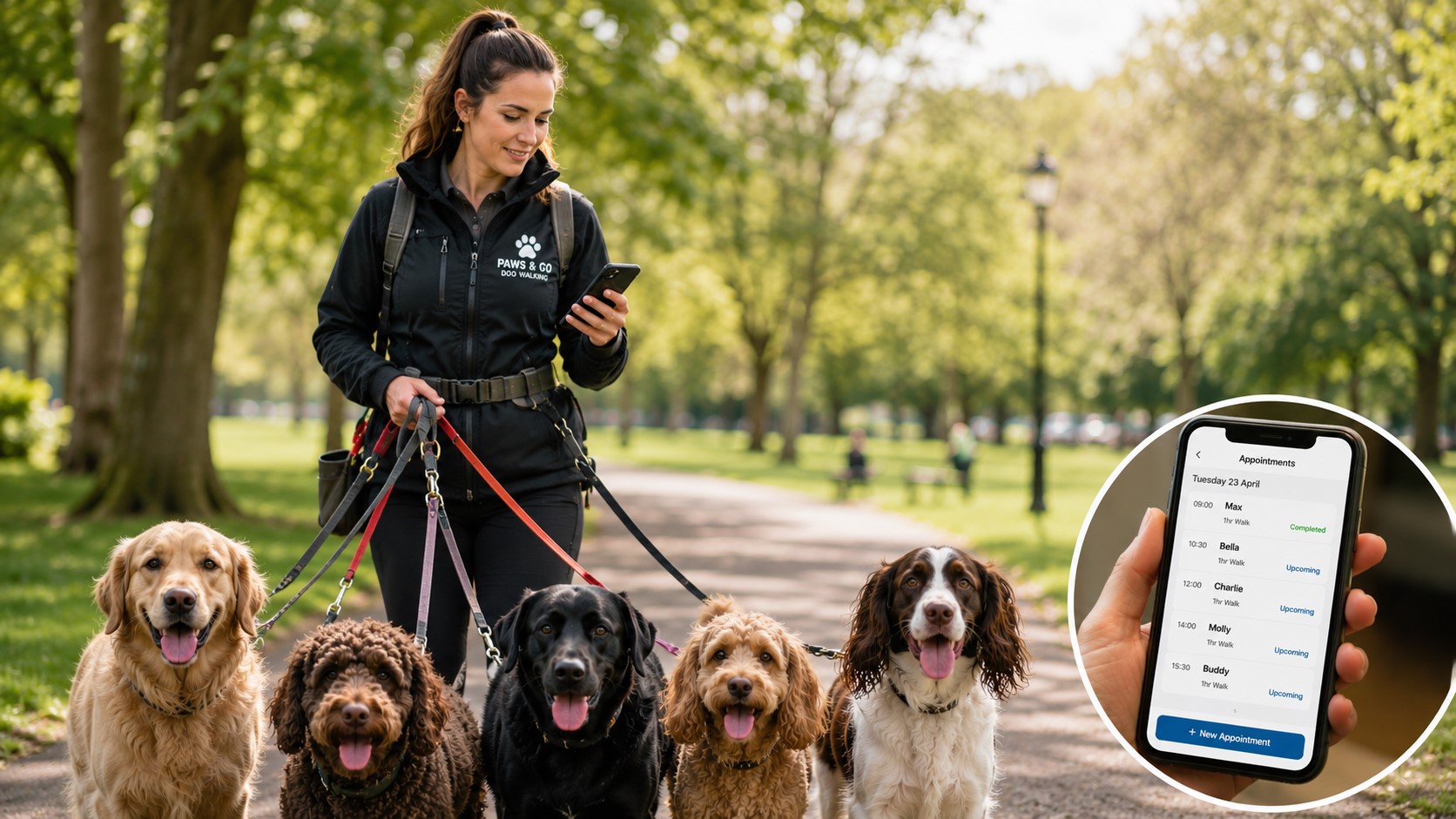
The NarpsUK mobile app allows you to manage your business while on the move.
Using the app, you can:
- View today's jobs
- Access client and pet information
- View schedules and calendars
- Mark jobs as completed
- Send invoices
- Stay organised wherever you are
The app synchronises with the desktop software, ensuring information remains up to date across all devices.
View Your Schedule at a Glance
The software includes several scheduling tools, allowing you to quickly see:
- Daily appointments
- Weekly schedules
- Monthly calendars
- Staff assignments
- Upcoming bookings
This helps prevent double-bookings and ensures you never miss an appointment.
Produce Business Reports
Understanding your business performance is essential for growth.
The software includes reporting features that help you monitor:
- Income
- Outstanding payments
- Client value
- Booking history
- Financial performance
The dashboard also provides an instant overview of your business, allowing you to see key statistics such as client numbers, pet numbers, booking activity, and outstanding invoices at a glance.
Designed Specifically for Pet Businesses
Unlike generic scheduling software, the NarpsUK system has been developed specifically for pet sitters, dog walkers, home boarders, and pet care businesses.
Every feature has been designed around the real-world needs of pet care professionals, helping you save time, reduce paperwork, improve organisation, increase efficiency, and provide a better service to your clients.
Whether you work alone or manage a growing team of pet sitters, the NarpsUK software provides the tools needed to run a professional and successful pet care business.
If you're looking for an easier way to manage your pet sitting or dog walking business, the NarpsUK Pet Business Software could be exactly what you need.
With client management, pet records, scheduling, invoicing, financial tracking, staff management, pet sitter availability monitoring, individual staff calendars, and a mobile app all included, it's the complete solution for modern pet care businesses.
Discover why more pet sitters and dog walkers are choosing NarpsUK to help manage and grow their businesses.