Quick Answer
Before the Christmas rush, professional pet sitters should confirm all bookings, update client and pet records, collect feeding and medication instructions, check emergency contacts, arrange home access and prepare for last-minute changes. They should also review insurance, organise their schedules and understand common festive hazards, including toxic foods, decorations and seasonal plants. A clear preparation checklist helps prevent missed appointments, incomplete instructions and avoidable risks during one of the busiest periods of the year.
Introduction
Christmas can be one of the busiest periods for professional pet sitters. While many families travel to visit relatives, attend celebrations or take winter holidays, their pets still need consistent care and attention.
For pet care professionals, this often means managing additional enquiries, overlapping bookings, changing schedules and clients who need reliable support while they are away.
However, accepting more bookings is only part of the challenge. Every pet has individual requirements, and even a small oversight involving feeding instructions, medication or home access can create unnecessary problems.
Preparing early allows pet sitters to manage festive demand without compromising animal welfare or service quality. Here is a practical Christmas pet sitting checklist to help you organise your responsibilities before the holiday period begins.
1. Confirm All Christmas Bookings in Advance
The first step is to establish exactly which clients require your services and when.
During December, booking requests may arrive close together, particularly for Christmas Eve, Christmas Day, Boxing Day and New Year's Eve.
Rather than relying on messages or memory, maintain a confirmed booking schedule.
Before accepting or finalising appointments, check:
- Client names and contact details.
- Pet names, species and number of animals.
- Booking dates and visit times.
- Address and service requirements.
- Agreed prices and payment arrangements.
- Any additional care requests.
- Cancellation and amendment conditions.
Contact existing clients to reconfirm their arrangements, especially if they booked several weeks or months earlier.
It is also sensible to establish a clear deadline for new festive bookings. This gives you time to review availability instead of accepting appointments that cannot realistically fit into your schedule.
2. Update Pet Profiles and Care Instructions
A booking confirmation does not necessarily mean you have all the information required to care for an animal safely.
A client's circumstances may have changed since their previous appointment. A pet may have started new medication, developed a dietary requirement or experienced a change in behaviour.
Before Christmas, review every pet's information and confirm that it is current.
Your checklist should include:
- Feeding times, quantities and dietary restrictions.
- Medication names, instructions and agreed administration times.
- Exercise and toilet routines.
- Behavioural characteristics and potential triggers.
- Allergies or known health concerns.
- Sleeping arrangements and favourite comfort items.
- Veterinary practice details.
- Emergency contact information.
Ask owners to confirm any changes rather than assuming previous instructions remain accurate.
Using organised pet sitting and dog walking information sheets can help you collect consistent information and reduce the risk of overlooking important details.
3. Prepare for Christmas Food and Decoration Hazards
Festive homes often contain items that are unfamiliar or potentially dangerous to animals.
Professional pet sitters should understand common Christmas hazards and know what to look for during visits.
Foods to keep away from pets
Some popular festive foods are unsuitable or toxic to animals, including:
- Chocolate.
- Mince pies and Christmas pudding containing dried fruit.
- Grapes, raisins and sultanas.
- Alcohol.
- Onions, garlic and leeks.
- Cooked bones.
- Foods containing xylitol.
Never assume that a small amount of leftover Christmas food is safe. Follow the owner's feeding instructions and avoid offering unfamiliar treats.
Decorations and household hazards
Also check for potential dangers such as:
- Tinsel, ribbons and wrapping materials.
- Broken baubles and small decorations.
- Electrical cables and fairy lights.
- Candles and unattended flames.
- Poinsettia, holly, mistletoe and other potentially harmful plants.
If you suspect an animal has swallowed something poisonous or dangerous, contact a vet immediately. Do not wait for symptoms to appear or attempt home treatment without veterinary advice.
4. Check Emergency Contacts and Veterinary Arrangements
Emergency preparation is particularly important during Christmas because normal veterinary opening arrangements may differ over bank holidays.
Before accepting responsibility for a pet, confirm that you have:
- The owner's primary telephone number.
- An alternative emergency contact.
- The registered veterinary practice's details.
- Information about relevant medical conditions.
- Current medication instructions.
- The owner's preferred emergency communication arrangements.
- Clear instructions about veterinary treatment and authorisation.
Ask clients which veterinary practice they would like you to contact and establish an appropriate emergency procedure in advance.
Do not assume that the nearest veterinary practice is the one the owner uses.
For additional preparation, review emergency pet information and record-keeping procedures so important details can be accessed when required.
5. Organise Your Daily Schedule and Travel Arrangements
Christmas traffic, winter weather and additional appointments can make an ordinary working day more difficult to manage.
A schedule that works during quieter months may become unrealistic when several clients request visits within similar time windows.
Before confirming your festive workload, consider:
- Travel time between appointments.
- Distance between clients' properties.
- Parking and access arrangements.
- The duration of each visit.
- Existing client commitments.
- Time for unexpected delays.
- Your own availability during bank holidays.
Avoid scheduling appointments too closely together. A delayed journey or unexpected incident should not prevent you from providing proper care to the next animal.
Digital scheduling tools can make this process easier. For example, pet sitting software for managing bookings and appointments can help keep client details, appointments and schedules organised in one place.
6. Confirm Home Access, Keys and Security Instructions
Many professional pet sitters need access to clients' homes while owners are travelling.
This makes key management and property security an important part of Christmas preparation.
Before the first visit, confirm:
- Which key belongs to each property.
- Where keys will be collected and returned.
- Alarm codes and entry instructions.
- Any restricted areas within the property.
- Door and window security arrangements.
- Whether another person has authorised access.
- Instructions for unexpected visitors or deliveries.
Keep keys securely stored and clearly identified without attaching clients' full addresses.
Never share access codes or sensitive property information unnecessarily. Any change to access arrangements should be confirmed directly with the client.
7. Review Your Insurance and Business Documents
Professional responsibilities do not stop during the festive period. In fact, additional bookings can introduce new risks if your business arrangements are not up to date.
Before Christmas, review your insurance policy and check that the activities you provide are included.
Pay particular attention to:
- Public liability protection.
- Care, custody and control cover.
- Pet sitting and overnight care activities.
- Loss of keys protection.
- Any restrictions relating to staff or subcontractors.
Also check that your client agreements, booking forms and emergency authorisations are complete.
If you are unsure whether your current policy covers a particular service, contact your insurer before accepting the booking.
You can review the available pet sitting and dog walking insurance options to understand the protection relevant to professional pet care activities.
8. Keep Clients Updated Throughout the Festive Period
Good communication helps maintain client confidence, particularly when owners are away from home.
Before Christmas, agree how and when clients would like to receive updates.
Depending on the service, this could include:
- A message confirming arrival.
- Updates about feeding and exercise.
- Photographs where appropriate and agreed.
- Information about unusual behaviour.
- Confirmation that the visit has been completed.
- Immediate communication about emergencies or concerns.
Avoid making promises about communication frequency that you cannot realistically maintain during busy periods.
If you work with additional staff, make sure everyone understands the agreed communication procedures and knows who is responsible for contacting each client.
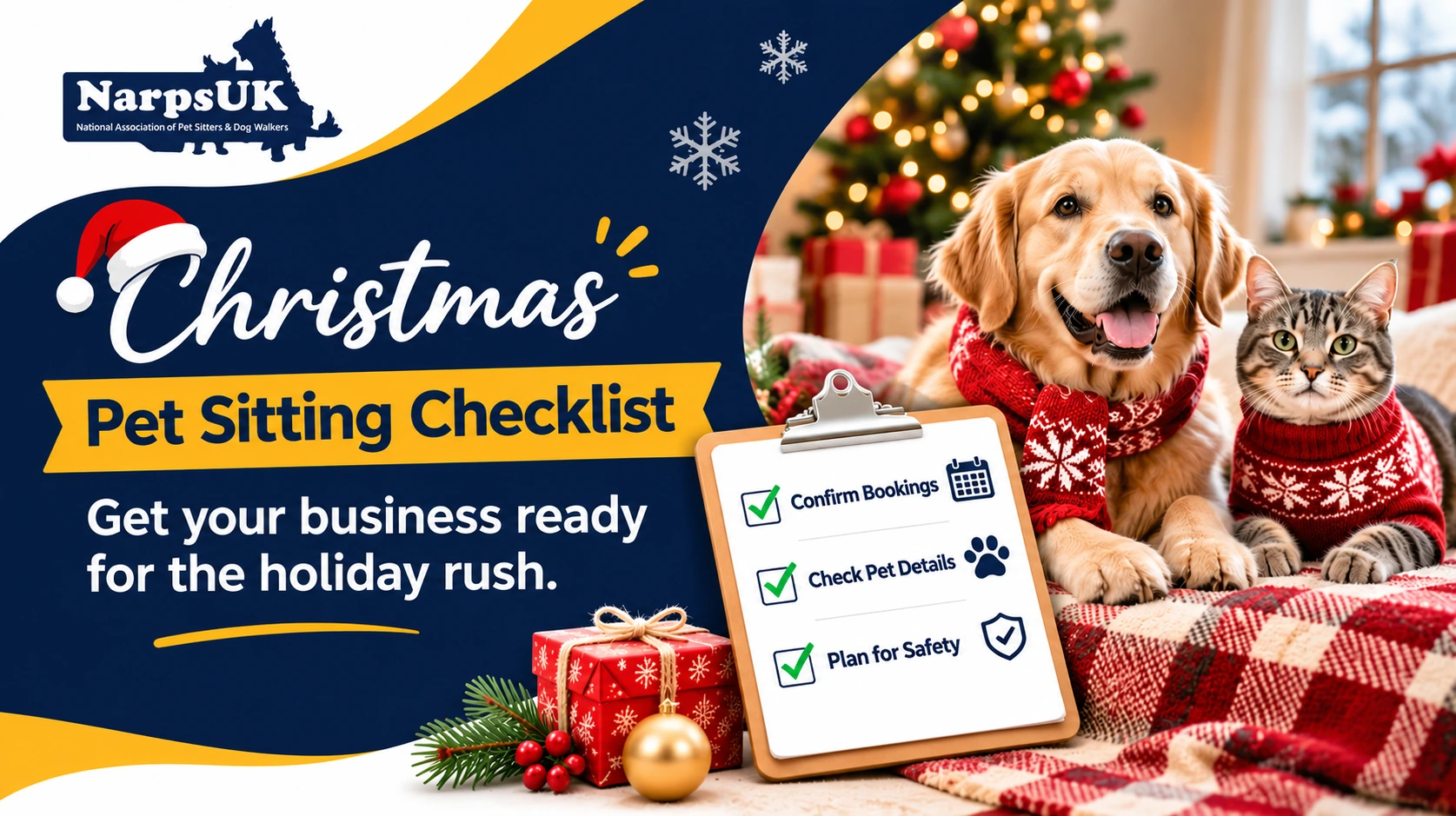
9. Create a Final Christmas Pet Sitting Checklist
Once bookings and arrangements are confirmed, use a final checklist before the holiday period begins.
|
Preparation task
|
Completed
|
|
Confirm all Christmas and New Year bookings
|
☐
|
|
Update client and pet information
|
☐
|
|
Confirm feeding and medication instructions
|
☐
|
|
Check emergency contacts and veterinary details
|
☐
|
|
Review travel times and appointment schedules
|
☐
|
|
Confirm keys and home access arrangements
|
☐
|
|
Review insurance and client agreements
|
☐
|
|
Check festive food and decoration hazards
|
☐
|
|
Agree client communication arrangements
|
☐
|
|
Prepare emergency contact information
|
☐
|
Keep the checklist accessible and review it whenever a booking changes.
If you manage several clients, using a centralised pet business management system can help reduce paperwork and keep essential business information organised.
Frequently Asked Questions
1. How early should pet sitters prepare for Christmas bookings?
Ideally, start reviewing availability and contacting existing clients several weeks before December. Some owners arrange Christmas pet care months in advance, so early planning helps you manage capacity and avoid overlapping appointments.
2. What should a pet sitter ask before looking after a dog at Christmas?
Ask about feeding routines, exercise requirements, medication, behavioural concerns, emergency contacts, veterinary arrangements and home access. Also confirm whether festive visitors, decorations or changes to the household routine could affect the dog.
3. What Christmas foods are dangerous for dogs and cats?
Chocolate, grapes, raisins, sultanas, alcohol, onions, garlic and certain sugar-free products containing xylitol can be dangerous. Cooked bones and some festive leftovers also present risks. Keep unfamiliar food away from pets and seek veterinary advice immediately if ingestion is suspected.
4. Should pet sitters charge more for Christmas and bank holiday visits?
Pet sitters may choose to introduce separate festive or bank holiday rates to reflect increased demand, availability and working arrangements. Any additional charges should be clearly communicated and agreed with clients before the booking is confirmed.
5. How can pet sitters manage multiple Christmas bookings without making mistakes?
Use a structured booking calendar, maintain updated pet profiles, confirm appointments with clients and allow sufficient travel time. A dedicated pet sitting management system can help organise schedules, client information, invoices and appointments in one place.
Conclusion
Preparing for the Christmas rush involves much more than accepting additional bookings. Professional pet sitters need to organise their schedules, review animal care instructions, understand festive hazards and establish clear emergency arrangements before clients leave for their holidays.
A structured preparation checklist can help reduce avoidable mistakes, maintain consistent care and give pet owners confidence while they are away.
Whether you are managing a handful of regular clients or a growing pet sitting business, having the right processes and systems in place makes a difference.
Want to manage your pet sitting business more professionally?
Contact NarpsUK today or register now to explore professional resources, business support and software designed to help you manage bookings, clients and daily operations more efficiently.
Give yourself more time to focus on what matters most: providing reliable, responsible care for every pet entrusted to you